
January 20, 2026 |

Who needs a Personal Website? |
Everyone! Stop giving your personal data to a cold callous social media corporation and the government. Build your own digital identity on the interweb highway and control who gets to access it.
Who benefits from having their own personal website where they control the narrative? Everyone! the individual with a skill to teach, the solopreneur with a service or exclusive product to sell. The affiliate marketer who needs a platform to explain his offers and the networker with a service that is too important to be stifled by the algorithms of the huge social media that wants to control what you are allowed to see and hear.
You can start a personal website for no cost, hosted by MobileFirst-Personal websites for no charge. Start to tell your story, build a digital asset that no big company can control while you can keep your personal information to yourself. You don't need to be at the top of the search engines, just in touch with the people who are important to you.
Our Sandbox plan is a free website with a lot of the integrated power of our paid platform. We want you to build a website. We want you to see how simple it is to communicate on the web, without the interference of complex algorithms and big corporate rules. As you build and become familiar with our simple interface, you will learn the power of having your own unfiltered voice on the internet, share your experiences and your knowledge with others. You don't need experience or technical skills to learn how to be your own webmaster on your own and in total control, owning a digital asset that gives you a voice. |
Solopreneurs and small businesses can choose between MobileFirst-Personal and MobileIntros to build their mobile-optimized websites.
Both platforms use mobile-first technology, offer a variety of widgets including the BizCard, and allow sites to be installed as Progressive Web Apps (PWAs).
The main difference lies in domain management and branding.
MobileFirst-Personal gives users control by requiring a separately purchased domain and SSL certificate, enabling a fully personalized brand identity.
Users configure their own DNS, so the website stands apart with a unique domain.
On the other hand, MobileIntros provides an automatically generated URL—such as [yourname].mobileintros.ca—which removes the need for extra domain purchases or DNS setup.
This brings convenience but keeps branding connected to MobileIntros.
Ultimately, the decision depends on whether you prefer standalone branding or the simplicity of a built-in URL.
Read More... |
Quote Of The Day |
"Mobile users expect a seamless browsing experience. Design with their needs in mind first." |
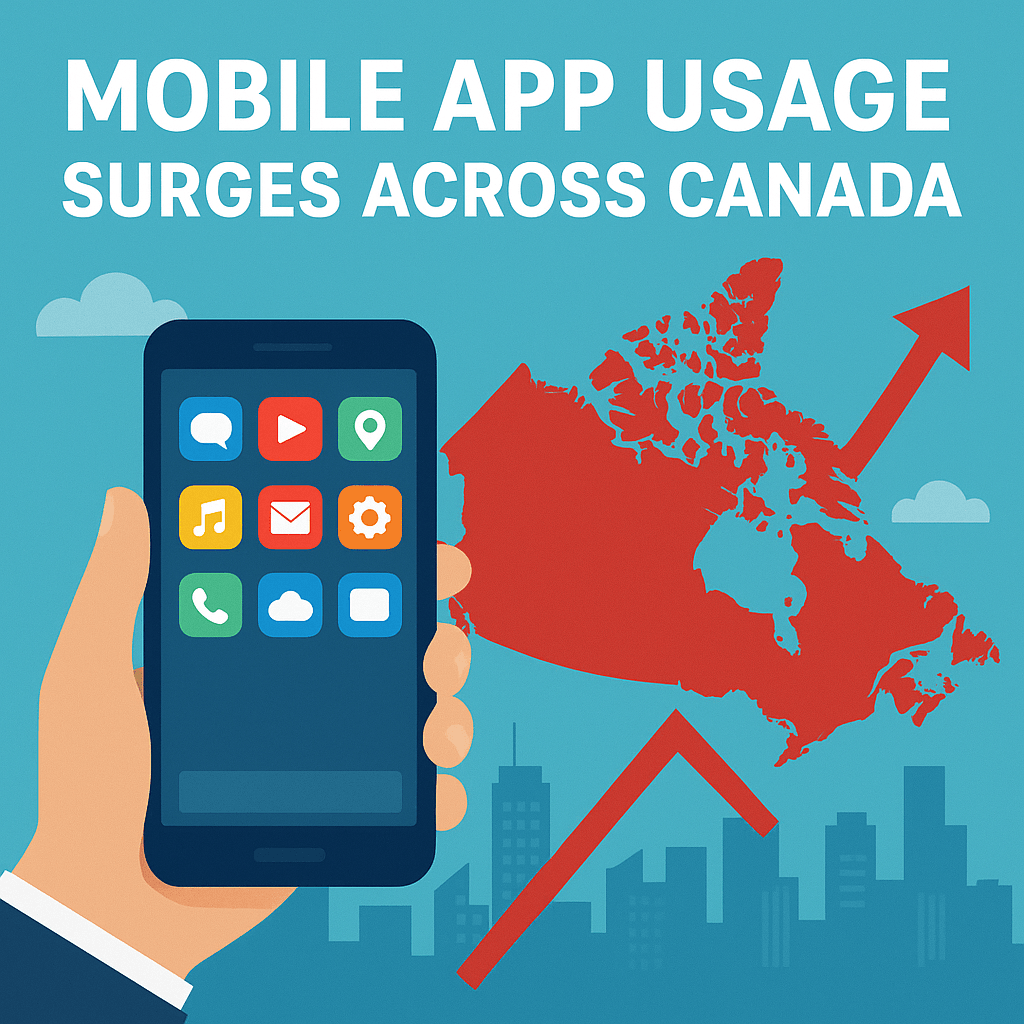 |
Mobile app usage in Canada has surged, signaling the country’s enthusiastic shift toward digital technology.
The market’s value reached an estimated $3 billion in 2024, reflecting remarkable growth in just a few years.
Canadians now spend an average of 4.6 hours daily on mobile apps, combining for nearly 20 billion hours of app use annually.
Millennials lead this trend, with 96% engaging in mobile apps every day—almost half of all users open applications more than ten times daily.
Social networking platforms remain dominant, connecting roughly 90% of Canadians.
In 2024, Temu became the country’s most downloaded app, topping 7.5 million installs, while Disney+ generated a leading $40 million in revenue.
With digital lifestyles on the rise, mobile technology is set to play an even greater role for Canadians in the years ahead. Read More... |
Tip of The Day |
Make sure to optimize your images for mobile devices to ensure faster loading times and better user experience. |
 |
At CES 2026, visitors were captivated by Samsung’s Galaxy Z TriFold, a breakthrough in foldable tech.
Unfolded, the device reveals a brilliant 10-inch Dynamic AMOLED 2X display, while folding down to a handy 6.5-inch smartphone size for everyday use.
Powered by a lightning-fast Snapdragon 8 Elite chip, 16GB RAM, and 512GB storage, the TriFold handles demanding apps and multitasking with ease.
Photo lovers will enjoy its 200MP main camera, capturing crisp, detailed shots in almost any setting.
The design stays elegant and practical, measuring just 12.9mm thick folded and weighing 309 grams.
Launching first in South Korea, the phone is coming to the U.S. in early 2026, likely priced near $2,500.
The Galaxy Z TriFold signals Samsung’s bold vision for the next era of mobile innovation. Read More... |
Q/A Questions |
Q: What is mobile-first design and why is it important for websites? A: Mobile-first design is an approach to web design that prioritizes the mobile user experience over desktop or other devices. It is important because more people are now browsing the internet on their mobile devices than on desktops, so websites need to be optimized for this growing audience. Q: How can a website be optimized for mobile-first design? A: A website can be optimized for mobile-first design by using responsive design techniques, such as fluid grids and flexible images, to ensure that the site looks and functions well on all screen sizes. It's also important to prioritize mobile-friendly features, such as easy navigation and quick loading times. Q: What are some examples of successful mobile-first websites? A: Some examples of successful mobile-first websites include Airbnb, Starbucks, and Buzzfeed. These websites are designed with mobile users in mind, featuring clean, easy-to-navigate layouts and fast loading times to provide a seamless user experience on smartphones and tablets. |
 |
Choosing the right search engine shapes your online privacy and experience.
Google dominates the market with about 90% share, offering deeply personalized results by analyzing users’ data and integrating services like Gmail and Maps.
This convenience comes at the cost of extensive data collection, which has sparked concerns over privacy and security.
In contrast, DuckDuckGo’s strict no-tracking policy appeals to users who value anonymity, ensuring searches aren’t recorded or shared.
DuckDuckGo doesn’t offer Google’s broad ecosystem, but provides uniform, unbiased search results without building user profiles.
Although DuckDuckGo holds only a 2.4% market share, its user base is steadily growing, fueled by rising digital privacy concerns.
Ultimately, the decision boils down to whether you value personalized convenience or strong privacy protections most. Read More... |