
Progressive Web Apps vs. Native Apps: Navigating the 2025 Mobile Landscape |
Explore the 2025 comparison between Progressive Web Apps and native apps, highlighting their strengths, challenges, and strategic considerations for businesses. |
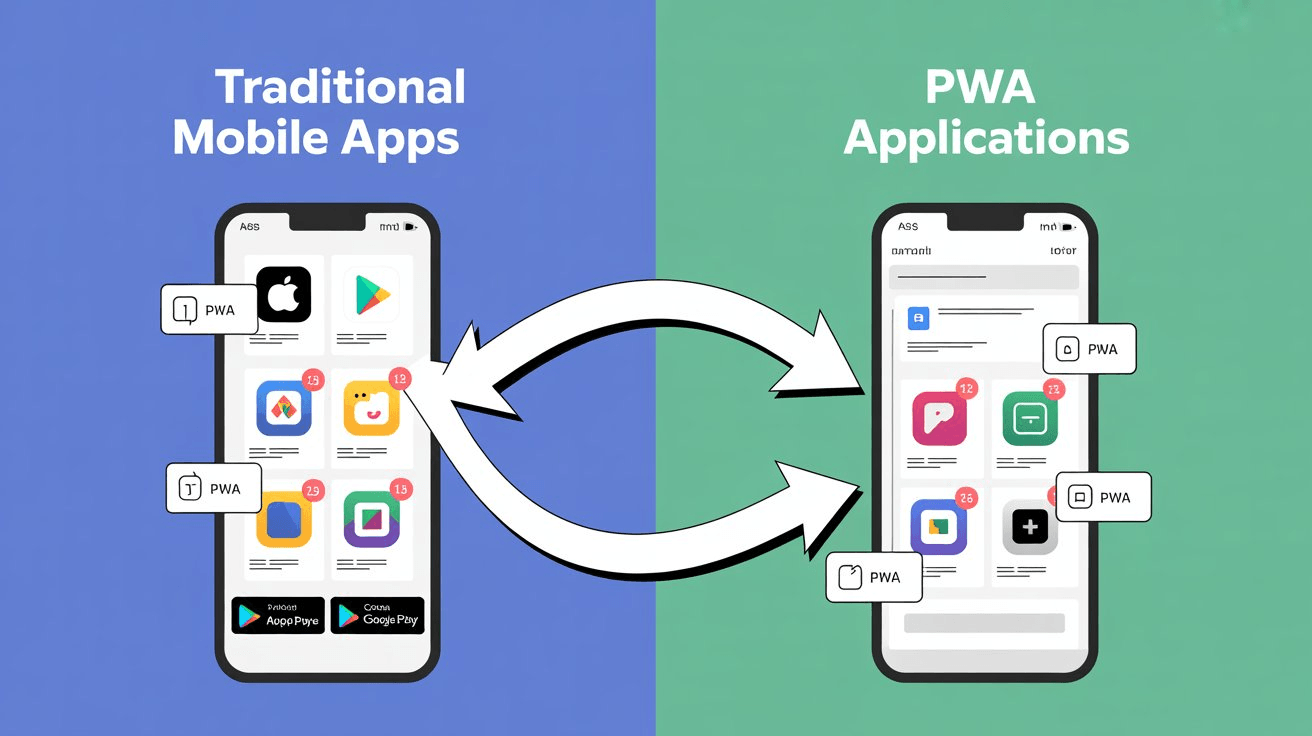
In 2025, the debate between Progressive Web Apps (PWAs) and native apps continues, with each offering distinct advantages tailored to specific business needs.
PWAs have gained significant traction, particularly in sectors like e-commerce and content delivery, due to their cost-effectiveness and broad reach.
Conversely, native apps maintain a stronghold in performance-intensive applications, such as gaming and augmented reality, where deep hardware integration is crucial.
Technical Comparison: Capability and Reach
Native apps offer unparalleled performance and full access to device capabilities, making them ideal for applications requiring intensive processing and real-time responsiveness.
However, they necessitate separate development for each platform, increasing time and costs.
PWAs, built on a single codebase, provide a unified experience across platforms, reducing development overhead. Advancements in web technologies have enhanced PWAs' performance, making them suitable for a wide range of applications.
Platform Politics: Regulatory and Vendor Dynamics in 2025
Major tech companies have made significant moves affecting the PWA and native app landscape.
Google and Microsoft have bolstered PWA support, integrating them more seamlessly into their ecosystems. Apple's gradual adoption of PWA features has expanded their capabilities on iOS devices.
Regulatory changes have also influenced app distribution, with some regions mandating more open app ecosystems, impacting how businesses approach app development and deployment.
When Each Approach Wins
Native apps are preferable for applications demanding high performance, extensive device integration, and where app store presence is vital for user acquisition.
PWAs excel in scenarios where rapid development, cost efficiency, and broad accessibility are priorities.
They are particularly effective for content-driven platforms, e-commerce sites, and services aiming for a wide audience without the barriers of app store approvals.
The Business Case in 2025
Businesses must weigh the trade-offs between PWAs and native apps based on their specific goals.
PWAs offer a cost-effective solution with faster time-to-market, appealing to startups and companies focusing on reach and engagement. With platforms like MobileFirst-Personal and MobileFirstCanada, the PWA is a few simple clicks away from installation while providing easy editing of the underlying website. This permits even technically challenged solopreneurs and service providers the ability to create and ten maintain a powerful PWA for their own particular requirements.
Native apps, while more resource-intensive to develop, provide superior performance and access to app store monetization channels, benefiting businesses where these factors are critical.
No Single Winner – But Clear Trade-Offs
In 2025, the choice between PWAs and native apps is not about selecting a superior option but about aligning the technology with business objectives. Native apps are still often way too technical and device specific to be used by solopreneurs.
Local businesses, service providers and other solopreneurs who are not interested in heavy device integration but more into the abilities to affordably deliver their services and products to a wider audience find the use of PWA Mobile Applications to be an advantage to their business and branding goals. Especially since they do not have to go through the hoops to get them accepted by the traditional store merchants.
Understanding the strengths and limitations of each approach enables businesses to make informed decisions, often leading to hybrid strategies that leverage the benefits of both to meet diverse user needs and market demands. |
0 Comments
Join the conversation
Be the first to comment
Share your thoughts above.