
Navigating the Evolving Landscape of Application Development in 2026 |
Explore the latest trends in application development, emphasizing mobile-first strategies and emerging technologies shaping the industry in 2026. |
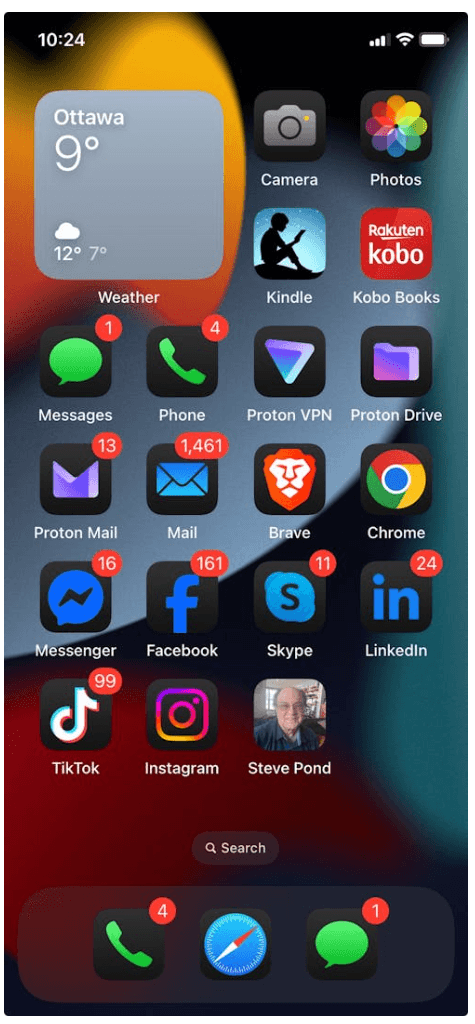
Think about the last app you used today. Maybe you checked the weather, ordered coffee, or scrolled through social media during your commute.
Behind each of those taps and swipes is a world of planning, coding, testing, and refining.
That's application development—the art and science of building software that actually works for people.
WHAT IS APPLICATION DEVELOPMENT?
Application development isn't just programmers typing away in dark rooms (though there's definitely some of that).
It's really about solving problems.
Someone had an idea: "What if people could order food without calling?" and developers figured out how to make it happen.
The process involves designing how an app looks and feels, writing the code that makes it function, testing it until it works smoothly, and then maintaining it as technology changes and users find new ways to break things.
It's part creativity, part logic, and honestly, part detective work when bugs show up.
WEB & APP DEVELOPMENT: TWO SIDES OF THE SAME COIN
You've got websites, and you've got apps, but the line between them keeps getting blurrier. Web development traditionally meant building sites you access through browsers—think shopping websites or news portals. App development focuses on software you download and install on your phone or computer.
These days, many companies build both, and they talk to each other.
Your banking app and banking website share the same backend systems. The frontend—what you actually see and click—might look different on your phone versus your laptop, but behind the scenes, they're cousins.
The backend is where the real magic happens. That's the database storing your information, the servers processing your requests, and all the security measures keeping your data safe. Modern applications are increasingly built with cloud infrastructure that can scale up or down based on demand.
MOBILE APP SOLUTIONS: WHERE THE ACTION IS
Let's be real—we're all on our phones constantly.
Studies show people spend about 88% of their mobile time in apps rather than browsers. Of course Facebook, Instagram and TikTok are a huge part of that slice.
That's huge.
And Americans? We're glued to our screens for over 5 hours daily.
This phone obsession has made mobile app development crazy competitive.
You've got native apps built specifically for iPhone or Android; these usually run faster and look sharper because they're designed for one system. Then there's cross-platform development, where you build once and deploy everywhere. Saves money but sometimes sacrifices performance.
Progressive web apps are interesting, too.
They're basically websites that act like apps; you don't download them from an app store, but they can work offline and send notifications.
For businesses watching their budgets, these are game-changers. Build out a website that can offer a restaurant's menu and create a PWA with it that can actually take orders directly. A real estate broker can build a website that shows off the homes they has to sell and then turn it into a PWA that can send push notifications of coming Open Houses to people looking for the perfect home in the area!
The mobile app market was expected to hit $613 billion in revenue by 2025, and it's only growing.
This growth is driven by everything from e-commerce to healthcare moving mobile-first. An even larger push is expected to come as Digital Business Cards become more and more popular as platforms like MobileFirst-Personal and MobileIntros eliminate the environmental drag on reusable resources to provide full featured websites as Digital Business Cards that are fully personalized for an idividual's requirements than are transformed into a PWA as part fot he platform's abilities.
YOU CAN BUILD YOUR OWN MOBILE APP?
You can spend thousands of dollars developing a native Application and then go through the hoops to get it certified to be distributed or sell on the Application Stores like Google and Apple. But you are going to find that new legislation os going to make the actual distribution harder and harder as a lot more persona information will be required to access them. Governments are beginning to legislate the availability of a Native App to children and other groups.
Or you could have a development company build one for you on their platform and hold you hostage forever more because they host and maintain it for you. If you are a large company with a complex service that can be monetized and is somewhat unique, this may be a good way to pivot.
But, if you are small business or entrepreneur, those companies are way out of your league. If your product or service has more time than money in the budget and your services and products are pretty confined and easily developed as a website, consider building the App on your own. MobileFirst-Personal and MobileIntros offer powerful platforms that can host an e-commerce store of thousands of products or multiple services without charging any commiusion no matter the level of sales you obtain, unlike Shopify stores where every thing you do has a separate charge it seems,and you are charged commission n top of that if you ar successful!
Good development companies ask annoying questions.
"Why do users need this feature?" "Have you considered how this scales?" "What happens if your server crashes?"
They're not being difficult; they're thinking through problems you haven't encountered yet should you decide to outsource your own App.
The tricky part is finding the right fit.
Look for companies with portfolios that match your vision, read reviews from actual clients, and pay attention to how they communicate during initial conversations. Of course the development price is important, but more important is how much they charge for ongoing maintenance and hosting
If they're confusing or dismissive now, imagine working together for six months.
WHAT'S ACTUALLY HAPPENING IN 2026?
AI is everywhere in development now.
Not just in the apps we use, but in how apps get built.
Developers use AI tools that suggest code, catch errors, and even generate entire functions.
Low-code platforms, where you drag and drop components instead of writing everything, are expected to handle 75% of new app development by 2026.
This doesn't mean developers are obsolete. But it evens the playing field when the platform being built on is using the same tools as the evelo0pers without the their expense.
Security's gotten serious.
People are tired of data breaches and shady apps selling their information. Modern apps encrypt everything, and often use multi-factor authentication. A PWA is installed into the phone's memory, noit as a website on a browser so it becomes much safer than standard website technology.
Users expect this now, not as a bonus feature but as a baseline.
Cloud computing has basically won.
Almost every new app builds on cloud infrastructure because it's flexible and cost-effective.
Need to handle 10,000 simultaneous users instead of 1,000? Cloud services scale automatically.
Your server crashes? Cloud providers handle redundancy.
THE REAL TALK ABOUT BUILDING APPS
Building a great app is harder than it looks and easier than you think; both are true.
The technical stuff? Some tools and frameworks handle a lot of complexity. MobileFirst-Personal is a leader in the integration of AI into the actual editor and will create a much easier path for most entrepreneurs who have the courage to learn the system and build their own applications from their websites.
The hard part is understanding what people actually need versus what they say they need.
Your users will surprise you. They'll ignore features you spent months perfecting and obsess over tiny details you barely noticed. They'll use your app in ways you never imagined.
Good development means staying flexible and listening when users tell you (directly or through their behavior) what's working and what isn't.
For anyone considering diving into app development, whether building your own or hiring a team, do your homework. Understand the landscape. Look at what successful apps in your space are doing.
But don't just copy them. Find the gap they're missing and fill it better.
The apps that succeed in 2026 and beyond won't necessarily be the ones with the most features or the fanciest design. They'll be the ones that genuinely make someone's day easier, solve a real frustration, or create a moment of delight. In the case of the solopreneur, the App will match the client to the services they require, be it a restaurant menu, the right broker pr the service they need right now.
Application development keeps evolving—new languages, new frameworks, new platforms.
But the core remains constant: understand the problem, build something that solves it, and keep improving based on real feedback.
Everything else is just details. |
0 Comments
Join the conversation
Be the first to comment
Share your thoughts above.